OpenAI's Existential Crisis: Are GPT 5.2 and a $1B Disney Deal Enough?
Ejaaz:
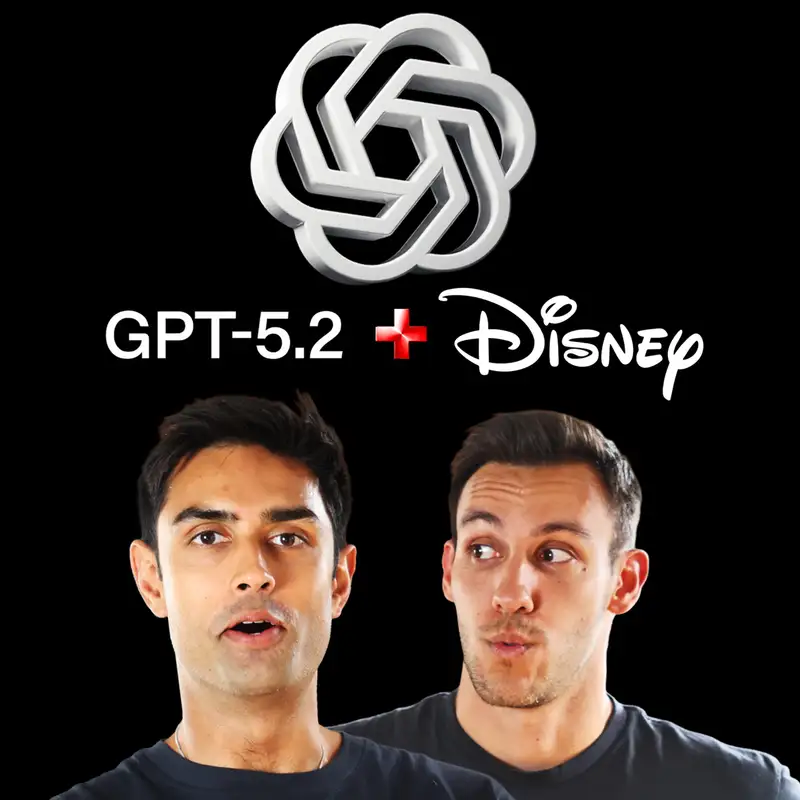
OpenAI just shipped GPT 5.2, the new best model in the world.
Ejaaz:
And yet, why does it feel like they're still fighting for survival?
Ejaaz:
80% of Vibe coding is done using Claude Anthropics model, and more people are
Ejaaz:
using Google's Gemini models versus ChatGPT.
Ejaaz:
So it begs the question, what's OpenAI even useful for?
Ejaaz:
In fact, this year alone, they're projected to lose $20 billion and only projecting
Ejaaz:
to be profitable by 2030. That's five years from now. A lot can happen.
Ejaaz:
And on top of all of this, they have a $1.4 trillion bill to pay on compute and data center costs.
Ejaaz:
So whichever way you look at it, the walls seem to be closing in on OpenAI.
Ejaaz:
And Sam is feeling the pressure. He called in a code red two weeks ago,
Ejaaz:
which companies only really do when they're in crisis mode.
Ejaaz:
But all might not be lost.
Ejaaz:
ChatGPT is still the number one AI app in the entire world. And just last week,
Ejaaz:
they signed a $1 billion deal with Disney to license their IP to create AI-generated video.
Ejaaz:
And rumors are amongst the grapevines right now saying that OpenAI may be IPO-ing
Ejaaz:
next year at a $1.2 trillion valuation, which will give them the much-needed
Ejaaz:
capital that they need to win.
Josh:
Yeah, in 2023 and 2024, the world was basically like, ChatGPT equals AI.
Josh:
If you're using AI, you're using ChatGPT.
Josh:
In fact, most people off the street If you ask them what AI was,
Josh:
they would tell you it's ChatGPT.
Josh:
There is a complete and total domination of the marketplace by this company.
Josh:
Up until this year this year the question has become
Josh:
not chat gpt does equal ai but like which ai
Josh:
do i use for which task there's not one ai that
Josh:
does everything anymore because they've kind of siloed themselves into these
Josh:
individual buckets where if you want to write code you don't go to chat gpt you
Josh:
go to anthropic if you want to create images you go to google and chat
Josh:
gpt is no longer the all-in-one app it's
Josh:
a place where you go to solve a specific set of problems and like sticking with
Josh:
the war analogy because this is the game of thrones it's like open ai used to
Josh:
have the only aircraft carrier in town everyone had to come through them to
Josh:
use them but now everyone has an aircraft carrier and the differentiator really
Josh:
becomes like supply chains alliances
Josh:
distribution and your ability to build applications that create actual value
Josh:
for users like us who want to use them so that takes us just to i guess 5.2
Josh:
which is what we're going to talk about today that open ai just recently launched
Josh:
and it should give us some hints as to where the company is going as they try
Josh:
to fight this resisting force that's closing in around them from all ends.
Ejaaz:
Yeah. So the resisting force comes in the form of Google's Gemini 3 Pro,
Ejaaz:
which released two weeks ago, and then Anthropics called Opus 4.5,
Ejaaz:
which is the frontier model when it comes to coding.
Ejaaz:
So really, when OpenAI released this model, people were looking at these two
Ejaaz:
competitors and seeing how it weighed up against it.
Ejaaz:
And the answer, Josh, is really, really well. It technically beats Claude Opus
Ejaaz:
4.5 encoding and it beats Gemini 3 Pro against a range of different generalized AI activities.
Ejaaz:
So technically, I think it is the best or number one model in the world.
Ejaaz:
And the reason why I'm kind of like a little uncertain about this is I just
Ejaaz:
feel like, to your point, they're gamifying towards benchmarks that don't really
Ejaaz:
matter or don't really apply to the real world.
Ejaaz:
But there is one particular benchmark that I thought was really cool that it
Ejaaz:
excelled in, which was GDPVAL, which basically measures how GPT 5.2 performs
Ejaaz:
in real-world expert-level tasks.
Ejaaz:
So I'm talking about things that people do in work that professionalize in their work.
Ejaaz:
And it was measured that in 70% of cases, Josh,
Ejaaz:
human experts would choose GPT 5.2's output and answer and the way that it deals
Ejaaz:
with that particular task versus an expert professional human that that's paid
Ejaaz:
hundreds of thousands of dollars a year which which kind of blew my mind and
Ejaaz:
that was the most valuable kind of takeaway um with gpt 5.2.
Josh:
So chat gpt feels like it's stuck between a rock
Josh:
and a hard place where they're optimizing for these vanity metrics but the
Josh:
actual day-to-day experience for a lot of users like
Josh:
myself and you are just not really changing much
Josh:
the product has mostly stayed the same the models are getting better
Josh:
but the only difference that i notice is that the
Josh:
tick in the little top left corner goes from 5.0 to 5.1 and
Josh:
now it says 5.2 but in terms of the actual outputs in terms
Josh:
of my experience using the platform not a whole lot has changed in
Josh:
addition to this they have tweaked the cost a little bit which is pretty pricey
Josh:
it's um 21 per million tokens in 168 per million tokens out so you're paying
Josh:
for a frontier model for sure and this is probably a result of them just using
Josh:
a tremendous amount of compute to optimize for these benchmarks,
Josh:
which is bizarre because Sam Allman came out and said, this is a 390x cost reduction
Josh:
in a year, which is pretty remarkable and
Josh:
You really have to take a step back and appreciate what they've been doing,
Josh:
because a lot of the sentiment around OpenAI right now is fairly bearish in
Josh:
the sense that they have a lot of hard challenges they need to overcome in order
Josh:
to make this whole thing work.
Josh:
But a 390 times cost reduction in anything in a year is pretty remarkable.
Josh:
And that's relative to, I believe, 03, which was, if you could believe this,
Josh:
it was released a year ago, which feels like an eternity ago.
Josh:
But it was literally not even 12 months ago. And since then,
Josh:
we've gotten, I mean, you could look at this Arc AGI chart, which is the benchmark
Josh:
that kind of everyone uses to gauge where these companies are on the path to AGI.
Josh:
They've made such an incredible improvement. And that token that used to cost
Josh:
a dollar now costs, what is one four hundredth of a dollar, whatever that is,
Josh:
just a fraction of the cost.
Josh:
And these, I mean, these changes are remarkable. So even though we're being
Josh:
particularly bearish on OpenAI, you do have to admire the fact that this industry
Josh:
is advancing so quickly.
Josh:
And what cost $400 yesterday now cost $1 today for something that is far higher quality.
Ejaaz:
All of that being said, Josh, I am not entirely sure that models are kind of
Ejaaz:
like the thing to optimize for, at least from a benchmarks perspective.
Ejaaz:
I think that OpenAI should be focused on one thing and one thing only that they
Ejaaz:
do really well, which is the consumer product mode.
Josh:
And we have a deal based on this that has come into play over the last week,
Josh:
which is the Disney deal, the $1 billion deal that they inked with Disney in
Josh:
order to hopefully, I guess, make a little bit more of a mainstream splash.
Josh:
I guess the way you could describe it is if you can imagine Disney as a sneaker
Josh:
brand and Sora is the machine that could generate these unlimited custom shoes.
Josh:
Until now, people were basically making these fake Nikes. And this is a big problem.
Josh:
There's a lot of these fake products that are reflective of the real thing,
Josh:
but lack in the quality. They're messy.
Josh:
They're legally very sketchy. and then disney is finally coming
Josh:
and they're kind of capitulating they're like okay we're going
Josh:
to officially license the designs but we're going to set the rules and
Josh:
we're going to make sure that we get paid so our brand doesn't get wrecked
Josh:
so this very much feels to me like a hedge against the
Josh:
destruction that was already starting so now fans
Josh:
can go and they could generate short videos using disney characters or marvel
Josh:
star wars whatever it is and then disney gets the opportunity to skin that the
Josh:
way they like put the guardrails in place and then disney also even offers plans
Josh:
to stream curated clips on disney plus so they're actually integrating this
Josh:
into their ecosystem so what you're seeing here
Josh:
And it is really funny. It's like they're letting you play with the characters,
Josh:
but not steal the actor's identity.
Josh:
And this feels like a 180 from where they've stood previously,
Josh:
because you just from what I understand, they're simultaneously suing Google
Josh:
over like copyright infringement stuff. So they're saying, no, no, no, no.
Josh:
If we're going to play this game, we're going to play this on our terms.
Josh:
And they committed at least a billion
Josh:
dollars to open AI to form this relationship and to start doing it.
Josh:
And to me, it feels interesting. And on the screen, we have a bear case,
Josh:
too, where it seems like they have just totally capitulated.
Ejaaz:
Yeah, effectively, what's being described here is, you know,
Ejaaz:
Disney, in his own words,
Ejaaz:
Disney is a $200 billion company sitting on only $5 billion worth of cash and
Ejaaz:
a $1 billion investment at a $500 billion valuation of OpenAI doesn't matter
Ejaaz:
to them at all on the upside case.
Ejaaz:
And so if OpenAI is going to IPO at a $1 trillion valuation, that's just a 2x.
Ejaaz:
So it doesn't make any kind of meaningful dent or impact on Disney's profit line.
Ejaaz:
Where I think the real value is coming in here, Josh, is long-term.
Ejaaz:
If you can have endless amounts of content generation for Disney's IP without
Ejaaz:
Disney needing to spend money on really expensive animators and teams to produce the content.
Ejaaz:
And, you know, animation takes like years to produce. Open Air can generate
Ejaaz:
it in a couple of minutes.
Ejaaz:
That is, it's kind of like free marketing. It's kind of like free PR and the
Ejaaz:
fans can make of it what they will without kind of Disney having to get their
Ejaaz:
hands dirty. So it kind of makes their IP endless.
Ejaaz:
And if Disney ends up owning all of it, then great.
Ejaaz:
And in fact, as part of this deal, if I'm not mistaken, OpenAI gets exclusive
Ejaaz:
rights on the IP for a full year before Disney kind of reclaims IP access or
Ejaaz:
IP licensing on the AI generated content.
Ejaaz:
So they really see that OpenAI has some kind of advantage here and they were
Ejaaz:
able to strike a pretty sick deal.
Josh:
Yeah. And the big boundary line is, is you can use the characters,
Josh:
but not the real performers, forces, faces or voices.
Josh:
So for me, this is exciting because I mean, imagine you were a kid.
Josh:
I always watched Disney Channel. I loved Disney Channel.
Josh:
And there's a world in which you start to get a custom curated Disney Channel
Josh:
just for you, where you have the characters, you have a universe,
Josh:
but it's all hyper tailored to the stuff that you are most interested in.
Josh:
And that seems exciting. It seems directionally
Josh:
correct in the sense that we're going to start leaning more into hyper
Josh:
custom content per person and disney's kind of leaning into that so props to
Josh:
them but that doesn't end our ai our open ai concerns for this week there there
Josh:
is more so as we were going through the financials we so we started to look
Josh:
in at them and they're losing a lot of money
Ejaaz:
How much to the tune of 20 billion dollars 20 billion dollars yeah yeah.
Josh:
Okay so they got 1 billion from disney so yeah they're exactly 120th of the way there
Ejaaz:
Right exactly and okay to give
Ejaaz:
them a few flowers 13 billion dollar annual recurring revenue is great right
Ejaaz:
but they're projected to be spending twice if not three times that amount of
Ejaaz:
money next year on data center costs alone josh so then you might be like well
Ejaaz:
they have paid subscribers right like so they should be fine.
Ejaaz:
Well, 5% of the 800 million weekly active users that they have actually pay. So that's 40 million.
Ejaaz:
And of that percentage, I guess quite a large percentage of them are only the
Ejaaz:
20 bucks a month subscribers.
Ejaaz:
So the point I'm trying to make here is the subscription model for OpenAI does not make sense.
Ejaaz:
In a world where it needs to make sense, I would guess they need to turn on advertisements.
Ejaaz:
As soon as they do that, in my opinion, it's going to make the product experience
Ejaaz:
even worse, which will push people towards or back towards Google and Claude
Ejaaz:
to kind of use their models for free.
Ejaaz:
And Google has an endless amount of cash flow so that they don't really care about this, right?
Ejaaz:
Another crazy number is how much of their revenue they're losing to Anthropic.
Ejaaz:
This year, Anthropic unseated them as the top enterprise AI model that is favored
Ejaaz:
by enterprises globally, a crown which OpenAI held for like a number of years prior to this.
Ejaaz:
So they're losing on that front as well. And then when it comes to just like
Ejaaz:
generally projecting their revenue, Josh, something that a number that they've
Ejaaz:
floated is, you know, by 2030, we'll have $200 billion worth of revenue.
Ejaaz:
But what people aren't contemplating
Ejaaz:
is how much they're still measured to be losing in that same year,
Ejaaz:
which is around the same amount, if not a little bit more.
Ejaaz:
And of course, like these bar charts and stuff are all just estimates.
Ejaaz:
No one knows how this will actually end up transpiring, but it's worthy to think about.
Ejaaz:
But the final one is the $1.4 trillion worth of compute that they're projected
Ejaaz:
to spend over the next five years.
Ejaaz:
And I actually want to come in here with a positive note, Josh,
Ejaaz:
because this is the biggest kind of debt on their balance sheet that people
Ejaaz:
kind of like bear about, right? They're saying like, hey, this is a really bad thing.
Ejaaz:
OpenAI is not going to be worth a lot of money because of this.
Ejaaz:
It's just a number. And it's just a clickbait number because it's not real.
Ejaaz:
If you look into the contracts and the terms that they've signed with all these
Ejaaz:
cloud providers, they don't actually need to spend this amount of money.
Ejaaz:
It's just the most amount of money that they could potentially spend with these
Ejaaz:
cloud providers, with these compute providers.
Ejaaz:
So realistically, if you look at the contractual deals for next year,
Ejaaz:
OpenAI just needs to spend up to $10 billion, which is a lot more feasible than
Ejaaz:
the $100 billion, which is contractually apparently all headlined to be for next year.
Ejaaz:
So there's a bit of fear mongering on social media about all of this stuff.
Ejaaz:
And I actually don't think the bear case is all that big for OpenAI.
Ejaaz:
In fact, I think it's quite bullish.
Josh:
Yeah, here's the thing. It's like with episodes like this, it's fun to talk about the drama.
Josh:
It's fun to talk about the downswings. These are subtle nuanced changes that
Josh:
are happening on a much longer, smoother trajectory, which is up and to the right.
Josh:
And the reality is that OpenAI is one of the most remarkable companies on earth.
Josh:
They are shipping the best AI in the world. And it's fun to nitpick.
Josh:
It's fun to pick at the headlines.
Josh:
But the reality is that these companies are printing tons of cash.
Josh:
They're spending more. So there are real concerns. But directionally,
Josh:
what we're seeing is this unbelievable progress,
Josh:
like 930 times cost reduction for a leading edge token over 12 months is so
Josh:
huge, especially considering that is one of many compounding factors.
Josh:
There's the cost per token, but there's also...
Josh:
Quality per token. And there is the cost per GPU, which has gone much lower.
Josh:
And there's the product now that is significantly better than it was a year ago.
Josh:
And we're getting all these compounding growth things that...
Josh:
I'm watching this funny video on the screen.
Ejaaz:
What is this? Is this from Sora? It just shows you what they're good at, Josh.
Ejaaz:
It puts a smile on your face. People actually want to use and consume these products.
Ejaaz:
And I feel like people are focused too much on the benchmarks.
Ejaaz:
They're focused too much on the numbers.
Ejaaz:
But the fact is, if people want to use your product, you'll end up being a pretty successful company.
Josh:
You're watching this really funny video of a snowman snowboarding.
Josh:
And this was not possible even a year ago because video generation has gotten much better.
Josh:
And just last week, three days ago, actually, it was OpenAI's 10-year anniversary.
Josh:
They've been around for a decade, which is pretty amazing because up until when? 2021?
Josh:
AI didn't even really exist in the consumer marketplace. So for six of those 10 years,
Josh:
nobody cared about open ai and then
Josh:
they released chat gpt 3.0 and that
Josh:
was the firing gun and the race started and now
Josh:
in the next four years the world has changed forever and open ai is
Josh:
very much responsible for that google had designed the
Josh:
transformer they had the architecture they did nothing with it for a really long time until
Josh:
open ai came around and started the race and is
Josh:
now leading the race and will continue to be a prominent player where they stand
Josh:
on the scale of things i don't know their 90 of the pie they had is certainly
Josh:
going to go down but even if it drops down to 30 30 of this pie is an enormous
Josh:
number and it leaves me just feeling excited and optimistic i mean the other wild card too
Josh:
is that they have the hardware device incoming and no one else is really building
Josh:
a dedicated hardware device with the world-class hardware designer.
Josh:
So that leaves something really excited to look forward to next year.
Josh:
But I think in terms of progress for this year, OpenAI had an unbelievable year
Josh:
and it's easy to talk down on it because relative to others,
Josh:
yeah, sure, they're losing some market share, but man, what a great company. What a great model.
Ejaaz:
And that's our episode for today, folks. A lot of you have been commenting about
Ejaaz:
giving our opinion on OpenAI, the bull case, the bear case, and the fact that
Ejaaz:
a lot of these AI companies are going public next year.
Ejaaz:
You know, a lot of you from the investing angle are super curious.
Ejaaz:
We will continue to be putting out our thoughts and opinions and putting out
Ejaaz:
the facts as much as we can. We hope you enjoyed today's episode.
Ejaaz:
If you enjoyed it, and if you enjoyed all of our other episodes,
Ejaaz:
we put out three or four, maybe even last week, Josh.
Ejaaz:
Go check them out, subscribe, put on notifications, give us a thumbs up,
Ejaaz:
give us a rating if you enjoy our content, and we will see you on the next one.
Josh:
See you guys.